
Rats & Rodents: How to Get Rid of Them for Good
A mouse does more than steal food — it chews through electrical wiring and spreads disease. Learn the rodent types living in your home, the signs that give them away, and how to get rid of them for good.
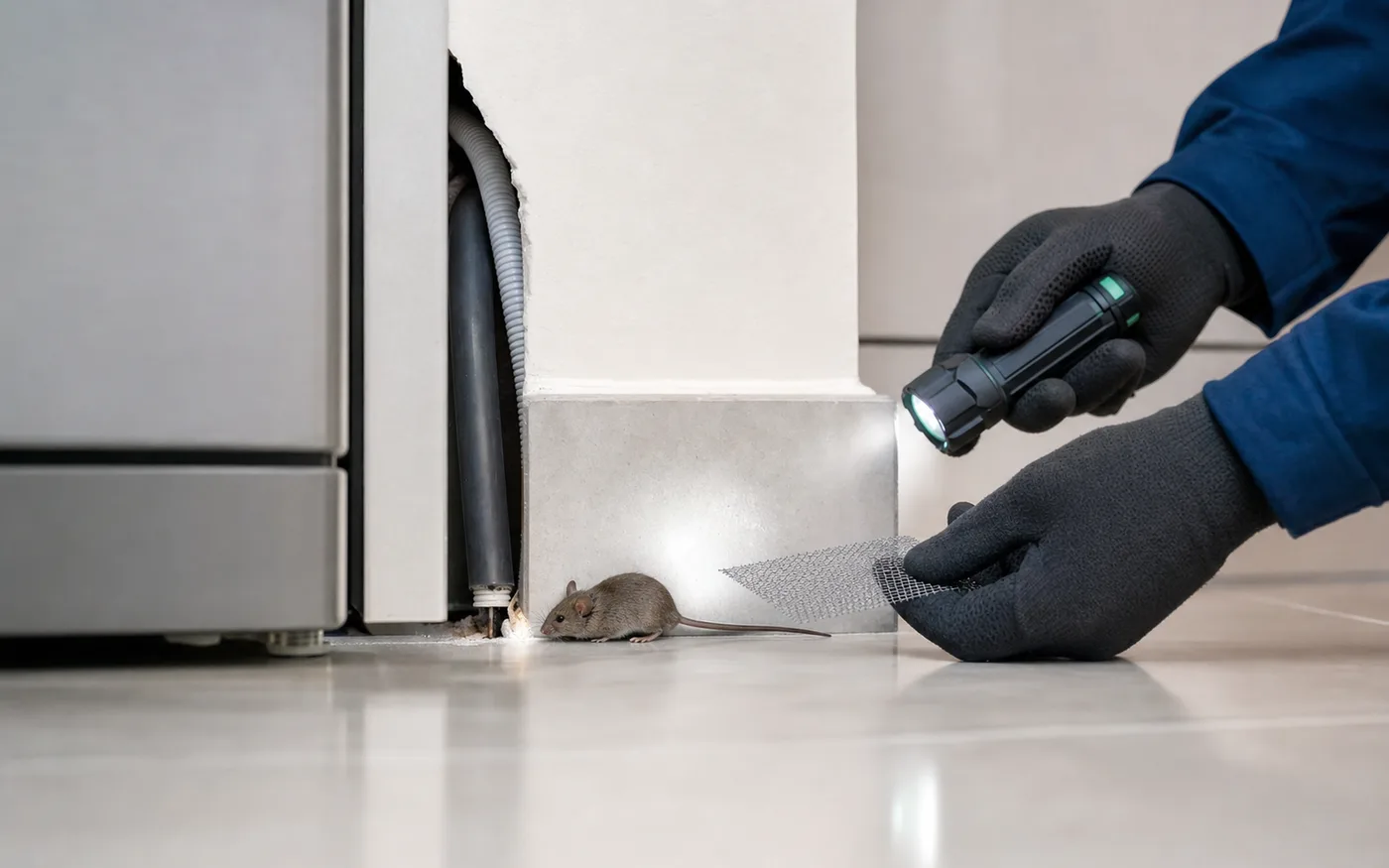
That sound that wakes you up at three in the morning — the scratching behind the water heater or inside the false ceiling — isn’t your imagination. It’s a rodent moving along its usual route. Most people’s first move is to grab a trap from the supermarket, set it, catch one, and assume the problem’s solved. A week later, the sound comes back. Why? Because the real problem was never the rodent you caught — it’s the gap it came through and the food that’s still waiting for the next one.
How Do I Get Rid of Rodents in My Home for Good?
Getting rid of rodents for good isn’t a single step — it’s three things that have to happen together: seal every entry point a rodent can use, cut off exposed food and water, and treat its exact travel routes with bait stations or traps. Do just one of these and skip the others, and the infestation will be back within weeks.
Here’s the idea you need to grasp from the start: a rodent doesn’t move around randomly. It runs the same routes along the same walls, returns to the same food sources, and lives in a hidden nest just a few meters from your kitchen. So when you catch one but leave the nest and the entry point untouched, you’re mopping water off the floor while the tap’s still running. That’s why our message at Zed Egypt never changes: we treat the source, not the surface. We track down the nest and the entry point and seal them — we don’t just spray the surface and call it done.
In the sections below, we’ll walk you through everything in detail — the types of rodents that could be in your home, the signs that give them away before you ever see one, the real risks they pose to your health and your home’s wiring, and the removal and control methods that actually work, not just theory.
What Types of Rodents Get Into Egyptian Homes?
In Egyptian homes, you’re mainly dealing with three types of rodents: the small house mouse; the large Norway rat (sewer rat), which lives on ground floors and in basements; and the black rat (roof rat), a skilled climber that lives in upper floors and false ceilings. Each species behaves differently, and that behavior determines where the nest is and which control method actually works.
Knowing the species isn’t a nice-to-have — it’s what tells you where to place the bait. A rodent nesting in the ceiling won’t be in the basement, and one living in the drains won’t turn up on your roof. Let’s break them down.
House Mouse (The Small Mouse)
This is the most common rodent found in apartments. It’s small — 7 to 10 cm long, not counting the tail — light gray, and moves quickly and lightly. It nests inside walls, behind cabinets, under the stove, and in cupboards that don’t get opened often. It nibbles small amounts from several spots rather than one big meal, and produces roughly 50 to 80 tiny droppings a day — the clearest sign that it’s around.
Norway Rat (Sewer Rat)
This is the big, heavy one. It can reach 25 cm including the tail, has a stocky build, and prefers ground floors, basements, building courtyards, and areas near drains and pipes. It digs burrows and gets into homes through drains or gaps under doors. This is the species that chews through plastic pipes and causes plumbing problems.
Black Rat (Roof Rat)
This is the acrobat of the rodent world. It’s agile, climbs pipes, trees, and cables with ease, and nests up high — in false ceilings, elevator shafts, above tall cabinets, and inside air-conditioning openings. If you hear movement “above you” in the ceiling at night, this is usually the culprit. It has a particular fondness for fruit and grains.
| Species | Size | Preferred Nesting Spot | Tell-Tale Sign |
|---|---|---|---|
| House mouse | 7–10 cm | Inside walls, under the stove, behind cabinets | Large numbers of tiny, scattered droppings |
| Norway rat | 20–25 cm | Basement, courtyard, near drains | Burrows in the ground and gnawed pipes |
| Black rat | 16–20 cm | False ceilings, high-up spaces | Nighttime movement overhead and gnawing up high |
What Are the Signs of Rodents in Your Home?
The clearest signs of rodents are small black droppings near walls and in drawers, gnaw marks on food, wood, and plastic, scratching and thumping sounds at night, and an ammonia-like (urine) smell in a closed-off corner. You’ll usually find this evidence days before you ever see the rodent itself, since it’s active while you’re asleep.
Rodents are nocturnal and naturally wary of people, so you’ll rarely spot one during the day unless the infestation is severe and competition for food has gotten fierce. That’s why it pays to learn how to read the evidence:
- Droppings: small, dark pellets about the size of a grain of rice, clustered along travel routes — near walls, inside kitchen cabinets, behind the fridge. Soft, dark droppings mean the infestation is active right now.
- Gnaw marks: teeth marks on the corner of a food box, a phone charger cable, the edge of a wooden door, or a bag of rice. Rodents gnaw to file down their teeth, not just because they’re hungry.
- Grease trails: rodents travel along walls and leave a dark, greasy gray smear along their route from their dirty fur. If you spot a gray streak along the base of a wall, that’s their path.
- Sound: scratching, scurrying, and light running noises in the ceiling or inside the walls at night, once the house has gone quiet.
- Smell: a sharp ammonia odor in a closed-off corner or a cabinet that rarely gets opened — this is rodent urine, and it becomes more noticeable in larger infestations.
- Pet behavior: if your cat or dog stays fixated, staring at one particular spot on the wall or under a cabinet, trust its instincts.
An important rule: if you spot one rodent during the day, there are likely several more hiding out of sight. Rodents breed at an alarming rate — a single female can have 5 to 10 pups per litter and can conceive again just days later. That means one pair can multiply into dozens within months. Time isn’t on your side here.
What Damage Do Rodents Cause to Health and Property?
The health risks of rodents are real, not exaggerated: their urine and droppings carry bacteria like salmonella and leptospira along with viruses like hantavirus, and their fur can trigger allergies and asthma, especially in children. As for your home, their gnawing on electrical wiring is a well-documented cause of short circuits and fires. The damage goes far beyond a little stolen food.
Let’s break this down, because people tend to underestimate it until something goes badly wrong.
Health Risks
A rodent isn’t out to bite you — but it is a walking contamination machine. As it crosses your kitchen counters and food, it leaves behind urine, droppings, and shed fur. Some of the best-known illnesses linked to rodents include:
- Salmonella: food poisoning transmitted when a rodent walks across exposed food or dishes. Symptoms include diarrhea, cramping, and fever.
- Leptospirosis: transmitted through rodent urine that contaminates water or food, and it can affect the liver and kidneys.
- Fever and bites: a rodent bite can become infected and transmit disease, which is especially concerning for children sleeping close to the floor.
- Allergies and asthma: rodent fur and dried droppings break down into airborne particles the household breathes in, triggering asthma attacks and respiratory allergies in children and sensitive adults.
- Contaminated water tanks and stored food: rodents reach places that rarely get cleaned, and any food they cross becomes contaminated even if it still looks fine.
The real danger is that all of this happens without you ever seeing the rodent. You’re eating in a kitchen it walked across the night before, with no idea it was ever there.
Damage to Your Home and Wiring
This is where things escalate to a genuine risk to life. A rodent’s teeth keep growing throughout its life, so it’s forced to gnaw on something hard to file them down and keep their length in check. Unfortunately, electrical wiring is exactly the right size and texture for its teeth.
When a rodent chews through the plastic insulation around a wire, it exposes the bare copper underneath. That exposed copper, when it touches another wire or a metal surface, creates a short circuit and a spark. And a spark next to wood, paper, or dust in an enclosed space is how fires start. Civil defense and insurance reports around the world attribute a significant share of building fires with no obvious cause to rodents gnawing through wiring.
They also chew through:
- Plastic water and drainage pipes, causing leaks.
- Furniture and wood, including door edges.
- Stored food, including bags of flour, rice, and pasta.
- Clothes, cardboard, and important paper, which they shred to build their nests.
In other words, a rodent isn’t just “a guest eating a bit of food.” It’s a health hazard and a fire hazard at the same time. That’s exactly why rodent control isn’t a luxury or extra tidiness — it’s protection.
What Are the Most Effective Ways to Repel and Control Rodents?
There are several ways to control rodents, but their effectiveness varies enormously. Mechanical traps work fast but only reduce numbers temporarily. Bait stations are effective when placed correctly along travel routes. Ultrasonic repellers have a weak, short-lived effect. The most successful approach combines active control with sealing entry points and cutting off food sources, all at once.
Let’s evaluate each method honestly, without exaggeration or empty promises.
Traps
- Snap traps: cheap, fast, and kill instantly. Good for small infestations. The downside is they only catch one rodent at a time, and they need to be placed correctly along the travel route next to a wall, not in the middle of a room.
- Glue traps: catch the rodent but leave it alive, which is distressing and inhumane, and the rodent can sometimes tear free and escape, leaving part of itself behind. We don’t recommend these.
- Live cage traps: capture the rodent alive so you can release it outside. A good option if you’d rather not kill it, but it needs checking daily.
Bait Stations
This is the backbone of professional pest control. Bait placed inside a secure, sealed station gets positioned along travel routes; the rodent feeds from it and dies back in its nest. The advantage is that it deals with the large, hidden population, not just the one rodent you happen to see. But it has to sit inside a station secured well away from children and pets — which is exactly what a trained technician handles. Exposed bait is dangerous, and only pesticides licensed by the Ministry of Health should ever be used.
Ultrasonic Rodent Repellers
Devices sold as “rodent repellers” that emit ultrasonic waves have been shown by independent research to have a limited, short-lived effect. Rodents are bothered for the first day or two, then adjust to the noise and go right back to their usual routes, especially since the waves don’t pass through walls or furniture. You can use one as a supporting measure, but don’t build your entire rodent-removal plan around it. Exposed food will always win out over any device.
Natural Repellents and Scents
Some people use peppermint oil, chili pepper, or mothballs as rodent deterrents. These scents may irritate a rodent temporarily within a small area, but they’re not a solution for an existing infestation, and they evaporate and fade quickly. Treat them as a light preventive measure, not a treatment.
| Method | Effectiveness | Temporary or Permanent | Note |
|---|---|---|---|
| Snap traps | Moderate, for small infestations | Temporary | Needs correct placement on the travel route |
| Professional bait stations | High | Permanent, when combined with sealing entry points | Requires licensed pesticide and a secured station |
| Ultrasonic repellers | Weak | Very temporary | Rodents adjust to it quickly |
| Natural scents | Weak | Temporary | Light prevention, not a treatment |
| Sealing entry points + cutting off food | Foundational | Permanent | Without this, every other method eventually fails |
The honest bottom line: there’s no single magic method. What actually makes the difference is combining them — shutting the door on the rodent, cutting off its food, and treating its travel routes. That’s what getting rid of rodents for good really means.
How Do I Seal Rodent Entry Points and Prevent Them From the Start?
Sealing entry points is the single most important step in getting rid of rodents for good and keeping them from coming back. A small mouse can squeeze through a gap just 6mm wide — about the width of a pen tip. So you need to track down every crack and opening around pipes and under doors and seal them with sturdy wire mesh, steel wool, and cement — not with sponge or plastic a rodent can simply chew through.
Rodents have an unusual ability: their bones are flexible, so if an opening’s big enough for the head to fit through, the rest of the body follows right behind. That’s why inspecting a home for entry points needs to be a careful, detailed job. Places you need to check:
- Under exterior doors: the gap under the apartment’s front door or the kitchen’s outside door. Install a sturdy door sweep to close off the gap.
- Around water, drain, and gas pipes: the opening where a pipe passes through the wall is usually a bit too wide. Seal it with steel wool and cement over the top.
- AC and extractor fan openings: fit fine wire mesh over any exterior openings.
- Cracks in walls and flooring, especially in the kitchen, bathroom, and balcony.
- Around the electricity and water meters, and the electrical panel.
- Drain openings and floor drains: fit a mesh drain cover or a valve that stops rodents from climbing up through the drain.
The materials that actually work for sealing: steel wool, because a rodent can’t chew through it, fine metal wire mesh, and cement or a strong sealant. Don’t use sponge, tape, or foam — a rodent will chew through any of these in a single night.
Daily Prevention: Cut Off Its Food and Water
- Store food — rice, flour, pasta, breadcrumbs — in airtight containers, not bags.
- Don’t leave cat or dog food out uncovered overnight. Pick it up.
- Wipe up food crumbs from the floor and under the stove before bed.
- Empty the trash bin every day and keep it covered with a lid.
- Fix leaking taps — rodents need water just as much as we do.
- Keep the storage room and balcony tidy, since clutter and cardboard make an ideal nesting spot.
The simple truth: a clean home that’s properly sealed just isn’t appealing to a rodent in the first place. Prevention is cheaper and far less hassle than treatment, by a wide margin.
When Do I Need a Professional Rodent Control Company?
You need a professional rodent control company when the infestation is large or keeps coming back despite traps, when you hear movement in the ceiling or walls (meaning the nest is inside the building), when you spot a rodent during the day, or when you find gnaw marks on wiring. A professional company locates the source and the entry points and treats them with safe, licensed pesticides, backed by a written guarantee.
Tried a trap, caught one or two, and the sound came back anyway? That means the actual numbers are higher than what you’re seeing, and the nest is tucked away somewhere inside the building. This is where DIY reaches its limit, because you need someone who can read the travel routes, identify the entry points you can’t spot yourself, and apply professional bait in secured stations. Signs you need a specialist:
- You’ve spotted a rodent during the day (a sign of a large infestation).
- You keep hearing movement in the false ceiling or inside the walls.
- The infestation has returned more than once after trying traps.
- You’ve found gnaw marks on electrical wiring or pipes.
- You have children or people with health conditions at home and are worried about disease or about handling bait yourself.
- The property is a food shop, restaurant, or warehouse, where this touches your reputation and public health.
How Does Zed Egypt Handle Rodent Control?
We don’t just come in, spray, and leave. We treat the source, not the surface. Our technician starts with an inspection to identify the rodent species, its travel routes, and the entry points it’s using. We then place bait in secured stations right along those exact routes — certified German pesticides, licensed by the Ministry of Health, and safe for children and pets when placed correctly. We also help you identify which entry points need sealing so the rodent doesn’t come back.
What sets us apart:
- A free inspection before any work begins, with a clear price quoted upfront.
- Certified German pesticides that are safe for your family and pets.
- Licensed by the Ministry of Health — not just whatever happens to be on the market.
- A follow-up visit to confirm the infestation is fully cleared, not a single spray and goodbye.
- A written 3-year guarantee — if the rodents come back within the guarantee period, we come back and treat it again for free.
- Open 24/7, with same-day service across most areas of Cairo and Giza.
We won’t promise you some magical, lifetime eradication — that kind of claim simply isn’t true. What we do promise is proper work at the source, follow-up, and a written guarantee that protects you.
Frequently Asked Questions About Rats and Mice
Do Rodents Come Back After Treatment?
If rodent removal is done without sealing entry points and cutting off food sources, yes, they’ll be back within weeks. But if the treatment targets the source along with sealed entry points and follow-up visits, the chances of them returning become very low — which is exactly why we back our work with a written 3-year guarantee.
Is the Bait You Use Safe for Children and Pets?
We use pesticides licensed by the Ministry of Health, placed inside secured, sealed stations well out of reach of children and pets, never left exposed. Safety isn’t an extra for us — it’s part of doing the job properly.
How Long Do Rodents Live, and How Do They Breed So Fast?
A rodent typically lives one to two years, but it breeds at an alarming rate. A female is pregnant for about 20 days, gives birth to 5 to 10 pups, and can conceive again just days later. A single pair can turn into dozens within months, which is exactly why acting quickly matters.
What Is the Difference Between a Mouse and a Rat?
“Rat” is the common name for the larger rodents (Norway or black rat), while “mouse” usually refers to the smaller species (the house mouse). The difference comes down to size, behavior, and nesting location, but the control principle stays the same: identify the species, seal the entry point, treat the route.
Will a Cat Solve My Rodent Problem?
A cat can help as a deterrent and might catch one or two rodents, but it’s not a solution for an active infestation or a nest hidden inside the walls. Rodents can also transmit diseases and parasites that put the cat itself at risk. Think of a cat as a helper, not a substitute for proper control.
How Long Does It Take to Get Rid of Rodents?
It depends on the size of the infestation and the property. The inspection and initial treatment happen in a single visit, and the bait starts taking effect within days. We then schedule a follow-up visit to confirm the results before closing out the job. The full process usually takes one to two weeks, depending on the case.
A rodent isn’t a minor cleanliness issue you can shrug off — it’s a genuine risk to your family’s health and to your home’s electrical wiring. And if you’ve made it to the end of this guide, that means you’re taking the issue seriously, which is exactly the right call.
If you need someone to assess the problem in person and pinpoint the source and entry points, we’re ready at Zed Egypt. The inspection is free, the price is clear before any work begins, the pesticides are safe and licensed, and you get a written 3-year guarantee. Call us anytime — we’re open 24/7, and we’ll come put your mind at ease.
Need expert help with Rats & Rodents?
The Zed Egypt team controls Rats & Rodents at the source with safe German products and a 3-year guarantee.
See our RodentsFrequently asked questions
How do I get rid of rodents in my home for good?
Getting rid of rodents for good takes three things working together: sealing every entry point they use, cutting off exposed food and water, and treating their runways with bait stations or traps. A single spray or trap only reduces numbers temporarily, and the infestation comes back.
Do ultrasonic rodent repellers actually work?
Ultrasonic repellers have a limited, short-lived effect: rodents adjust to the sound within days and go right back to their normal routes. They can help as a supporting measure, but do not rely on them alone to solve an infestation.
What are the health risks of rodents?
Rodent health risks include transmitting salmonella, leptospirosis, and hantavirus through urine and droppings, triggering allergies and asthma from their fur, and bites that can become infected. Their urine contaminates food and surfaces without you ever noticing.
Why do rodents chew through electrical wiring?
Rodent teeth never stop growing, so they gnaw on anything to file them down, and wiring happens to be just the right size for their jaw. The problem is that chewing through the insulation exposes the copper underneath, a well-documented cause of short circuits and house fires.
How small a gap can a mouse fit through?
A small house mouse can squeeze through a gap only about 6mm wide, roughly the width of a pencil. That is why sealing the small openings under doors and around pipes is the single most important step in prevention.
When should I call a professional rodent control company?
If you spot a rodent during the day, hear movement in the ceiling or walls, or the infestation keeps coming back after trying traps, these are signs the nest is inside the building itself. At that point, a professional rodent control company can locate the source and seal the entry points with a written guarantee.
Want to solve the problem right now?
Free inspection · safe German products · 3-year guarantee · open 24/7.