
Cockroaches at Home: How to Get Rid of Them
Why do cockroaches keep coming back after spraying? Because no spray reaches the source hiding inside the wall. This guide covers the types of cockroaches found in Egypt, what causes them, and how to get rid of them for good.
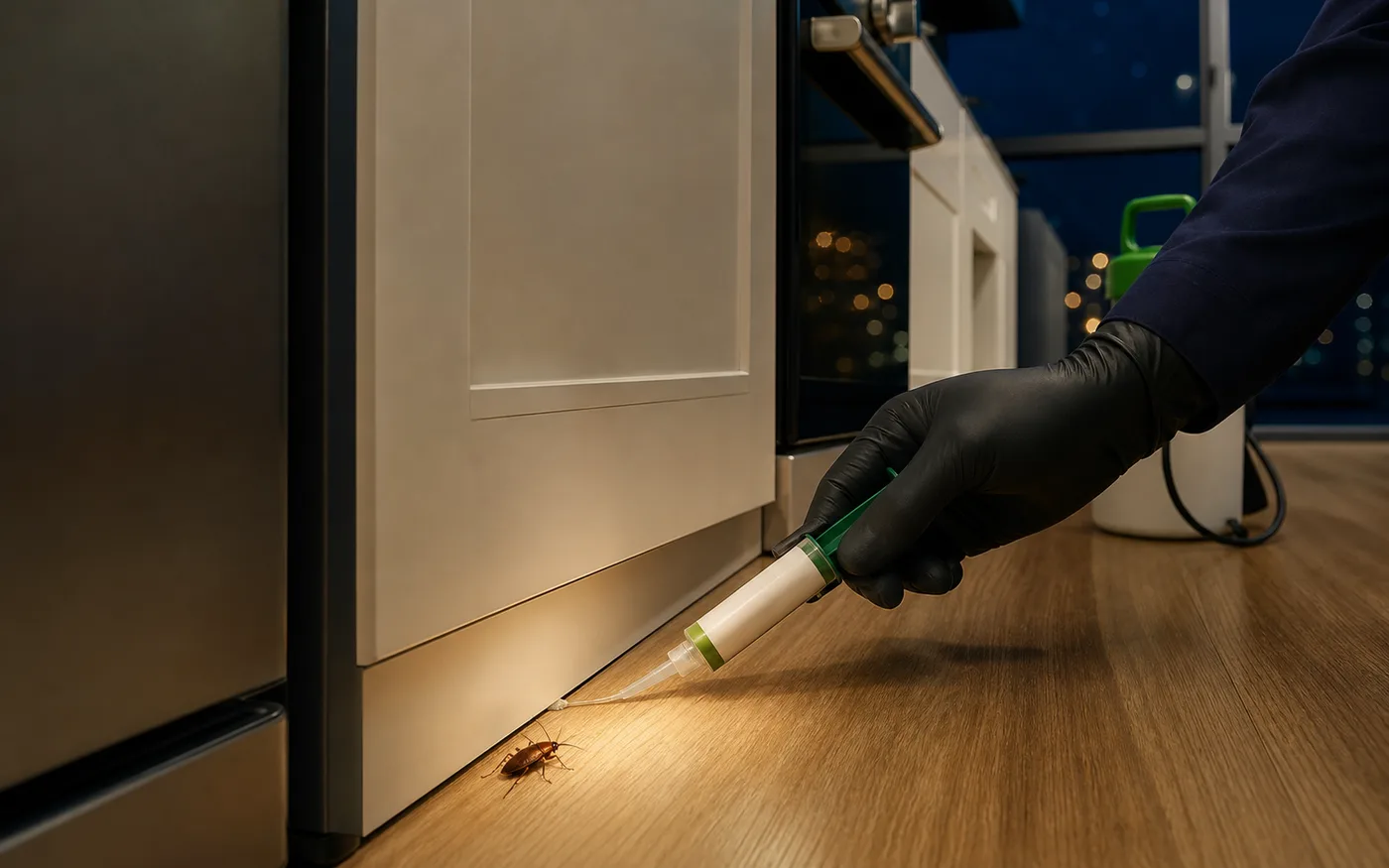
You wake up at two in the morning, head to the kitchen for a glass of water, and the moment you flip on the light, a cockroach darts across the counter and vanishes behind the stove in a split second. Anyone who has lived in an older apartment, or near a restaurant, knows that shiver. The problem isn’t the roach you saw. It’s the dozens you didn’t, sitting in the crack behind the cabinet.
Why do I keep finding a cockroach even though I cleaned the whole house?
Spotting a single cockroach during the day usually means a hidden colony is nearby. Cockroaches are nocturnal and hate light, so if one shows up in broad daylight, or sits in front of you at night without darting away immediately, that’s a sign the population has grown large enough that the hiding spots are overcrowded. The one you see is just the tip of the iceberg.
Cockroaches don’t show up only because a house is dirty. That’s a misconception that wears down a lot of genuinely clean people and leaves them feeling embarrassed. A cockroach needs just three things to survive: water, food (even a few crumbs), and a warm, hidden spot. The kitchen and bathroom provide all three in even the cleanest home. What actually happens is that cockroaches enter through drains, from a neighbor’s apartment, or hitching a ride on cardboard boxes and produce, then settle into cracks you can’t see in the first place.
What types of cockroaches in Egypt might you find in your home?
In Egypt, you’ll typically run into three species: the small German cockroach that nests in the kitchen, the large reddish American cockroach that comes up from the drains, and the black Oriental cockroach that favors damp, cool spaces. Each species behaves differently and occupies a different spot, and treatment differs accordingly, so identifying the species is half the battle.
The mistake that keeps people fighting a losing battle for months is treating every cockroach the same way. The one crawling up from the sink pipe doesn’t respond to the same treatment as the one living inside your microwave. Let’s break down each type.
The small German cockroach: public enemy number one in the kitchen
This is the smallest of the three species, measuring 1 to 1.6 cm, light brown with two dark, longitudinal stripes right behind the head. It’s what most people simply call the “small cockroach” or “kitchen cockroach,” and it’s the most dangerous of the three in terms of reproduction and spread.
A single female carries an egg capsule holding 30 to 40 eggs, and produces a new capsule every 3 to 4 weeks throughout her lifetime. That means, in theory, one female and her offspring could reach close to 30,000 individuals in a single year if nothing stops them. That’s why a little neglect can turn a kitchen into a full-blown colony.
It loves heat and warmth, so you’ll find it clustered inside the refrigerator motor, behind the electric water heater, inside the microwave, in the cutlery drawer, and in the gaps between wooden cabinets and the wall. Controlling these small cockroaches takes patience and the right method, because spraying scares them and scatters them into more hiding spots instead of killing them.
The large American cockroach: resident of drains and sewer openings
This is the largest of the three species, reaching up to 4 cm, with a shiny reddish-brown color, and it can fly short distances, which is exactly why so many people panic when it flies straight at their face. It lives mainly in drains, sewage systems, air shafts, ground floors, and garages.
It enters your home through the drain opening in the kitchen or bathroom, from under the apartment door, and through air shafts. It doesn’t usually breed inside the apartment the way the German cockroach does. Instead, it visits from an outside source. So if you’re seeing this large red type, the fix isn’t just spraying the apartment. It’s sealing the drain openings and treating the source it’s coming from.
The black Oriental cockroach: the moisture lover
This one is black or very dark brown, around 2.5 cm long, slower than the American cockroach, and stays closer to the ground. It favors cold, damp places: under sinks, in basements, next to exposed water pipes, and in stairwells on lower floors. It gives off a strong, distinctive odor once its numbers grow large.
It enters along with moisture and leaks, and feeds on decaying matter and garbage. Its presence signals that there’s a water leak somewhere, or excess moisture that needs attention.
| Species | Size | Color | Preferred Location | Risk Level |
|---|---|---|---|---|
| German | 1–1.6 cm | Light brown with stripes | Kitchen, warm appliances | Very high (rapid breeding) |
| American | 3–4 cm | Shiny reddish-brown | Drains, sewers, air shafts | Moderate (carries pathogens from drains) |
| Oriental | 2–2.5 cm | Dark black | Under sinks, basements | Moderate (signals moisture problems) |
What causes cockroaches to suddenly appear in an apartment?
Cockroaches show up whenever they find a source of water, food, and an entry point. The most common causes: a leak or moisture under the sink, food crumbs behind appliances, an exposed drain or a dried-out floor trap, cracks in the walls, and roaches migrating from a neighbor’s apartment or riding in on cardboard boxes and groceries. Usually there’s one main cause feeding the entire problem.
Let’s be realistic. Many people assume cockroaches reflect poorly on their cleanliness, and that isn’t always true. Even the cleanest home can get infested if there’s a hidden water leak, or if the neighbors have a problem and the whole building shares the same drainage system. Here are the main causes we find during inspections:
- Moisture and leaks: A dripping pipe under the kitchen sink, or condensation on the AC pipes, gives cockroaches a constant water supply. A cockroach can survive weeks without food, but dies within days without water. Water is the key factor.
- Exposed food and crumbs: Crumbs that fall behind the stove and refrigerator, dishes left in the sink overnight, pet food left out on the floor, and an open trash can. This is a 24-hour open buffet.
- Drains and dried-out floor traps: If there’s a bathroom or floor drain that isn’t used often, the trap dries out and the water seal blocking the pipe disappears, leaving a direct, open path for cockroaches to climb straight up from the sewer.
- Cracks and openings: Cracks in tiling, gaps around kitchen and bathroom pipes, gaps under doors, and joints between cabinet units. These serve as both entry points and hiding spots at once.
- Bringing them in from outside: Old supermarket cardboard boxes, a travel suitcase, secondhand furniture, or simply the neighbors. In many buildings, cockroaches travel between apartments through shared drainage pipes.
Treat the symptom without addressing the cause, and you’ll be fighting an endless battle. This is exactly where the difference lies between random spraying and a carefully planned treatment.
Do cockroaches actually spread disease, or is it just disgusting?
Yes, cockroaches spread real disease, not just disgust. They crawl through drains, garbage, and other contaminated places, picking up bacteria like Salmonella and E. coli on their legs and bodies, then walk across your food and dishes, contaminating them. Their droppings and shed skin also trigger asthma and allergies, especially in children.
The part many people don’t realize is the allergy and asthma connection. Cockroaches leave behind droppings, shed skin, and fragments of dead bodies. These break down into a fine dust that floats in the air and gets inhaled, and it’s one of the strongest asthma triggers for children in homes with a heavy infestation. Studies have linked cockroach presence to increased emergency room visits among asthmatic children in densely populated areas.
On the food side, cockroaches regurgitate and defecate while they eat. So it isn’t just that they walk across your counter. They leave behind traces that can cause food poisoning and stomach infections. That’s why having cockroaches in a kitchen where children’s food is prepared isn’t something to put off.
What’s the strongest cockroach pesticide: pharmacy brands or professional treatment?
No single pesticide deserves the title “strongest.” The real difference isn’t in the brand name. It’s in the type of active ingredient and how it’s applied. Pharmacy and supermarket sprays kill only whatever the spray directly touches, and scare off the rest. A professional uses gel bait and residual pesticides that reach the colony itself, and that’s what delivers a real, lasting solution instead of a temporary one.
Let’s be honest about the difference, since this is the question we hear most. The spray you buy for 20 Egyptian pounds and use on a cockroach kills it right in front of you, which feels like a win. But what actually happened is that you killed one and scared off fifty. The odor and repellent effect of the spray scatters the rest of the colony, driving it deeper into the walls, and can even trigger new nests forming in other rooms. That’s why people end up spraying every single day while the problem keeps growing.
The difference between pharmacy treatment and professional treatment
| Criteria | Pharmacy Spray | Professional Treatment |
|---|---|---|
| What it kills | Only what the spray directly touches | The entire colony, through bait |
| Does it reach the nest? | No, it scares and scatters | Yes, the cockroach carries it back to the nest itself |
| Eggs | Not affected | A follow-up visit catches the new generation |
| Timeframe | Hours, then they return | Weeks for complete elimination |
| Safety | Strong odor, airborne particles | Localized gel in concealed spots |
| Long-term cost | Repeated purchases every so often | One treatment visit plus a guaranteed follow-up |
The active ingredients professionals rely on, like fipronil and indoxacarb in gel form, share one crucial property: delayed action. The cockroach eats the bait, returns to the nest, and before it dies, the rest of the colony feeds on its droppings and carcass, spreading the effect through the entire colony. This mechanism is known as the “secondary kill effect,” and it’s what lets a small tube of gel wipe out an entire nest, something a spray could never do.
At Zed Egypt, we work with certified German pesticides, approved by the Ministry of Health, specifically chosen to be safe for children and pets when applied correctly. What matters isn’t how strong the poison is. What matters is whether it reaches the right place in the right way.
How do I get rid of cockroaches the right way, step by step?
Getting rid of cockroaches depends on four sequential steps: drying up water sources, cutting off their food supply, sealing cracks and entry points, and then placing bait and pesticide along the right pathways. Do all four together and you break their life cycle. Do just one and skip the rest, and they’ll be back within a short time.
The order here is deliberate. Many people start with spraying and skip everything else, which is the weakest approach possible. Here’s how to do it right:
- Dry up every water source. Fix the dripping sink, dry the dish basin at night, close off floor traps you don’t use, and wipe away condensation. Cutting off their water weakens them before you even apply any pesticide.
- Lock away food. Store food in airtight containers, remove pet food from the floor at night, clean behind the stove and refrigerator, and empty the trash daily in a sealed bag.
- Seal entry points and cracks. Use silicone sealant to close gaps around pipes, cracks in the tiling, and joints under cabinet units. Fit door sweeps under doors. This shuts off their hiding spots and blocks outside roaches from getting in.
- Place bait along the right pathways. Small dots of gel in corners, behind appliances, inside cabinets near the hinges, and around pipes. Don’t spray in the same spot where you’ve placed gel, since the spray will drive roaches away from the bait.
This last point is where many people go wrong. They place gel bait, then spray right over it, so the cockroaches avoid the entire area and the gel goes to waste. Spray and bait should never share the same spot.
How can I make sure cockroaches are gone for good and don’t come back?
Getting rid of cockroaches for good happens when you treat the colony and the eggs together, and close off the reasons they keep returning. Eggs are protected inside a hard capsule that most pesticides can’t penetrate, and they hatch in batches over several weeks. That’s why a follow-up visit 2 to 3 weeks after the first treatment is essential, to catch the new generation before it matures and starts laying eggs of its own.
The word “permanently” deserves some honesty. No trustworthy company can promise that a cockroach will never enter your home again for the rest of your life, especially if you live in a building with shared drainage or near restaurants. What we can genuinely guarantee is eliminating the current infestation at its roots and preventing its return for a long stretch of time, backed by a written guarantee, while guiding you on how to close off the underlying causes.
The reason people feel like cockroaches “just won’t die” is the egg capsule. The female protects the eggs inside it until they’re ready to hatch, and pesticide struggles to penetrate that capsule. So you might eliminate every visible cockroach today, and two weeks later a new generation hatches from eggs that were hidden away all along. That isn’t a treatment failure. It’s simply the nature of the life cycle. That’s why follow-up isn’t a luxury. It’s an essential part of doing the treatment right.
What makes the difference in keeping results lasting:
- Treating the source, not just the surface. If cockroaches are coming from shared drainage, the entry points need treatment, not just spraying the apartment.
- A follow-up visit. To catch the newly hatched generation. Without it, they’ll be back within a month.
- Sealing entry points. Any gap left open is an open invitation for a new infestation.
- A written guarantee. So you can rest assured that if they return during the guarantee period, they’ll be treated again at no extra cost.
What prevention steps keep cockroaches from ever coming back?
Prevention is far cheaper and easier than treatment. The most important prevention habits: keep the kitchen dry at night, store food sealed, empty the trash daily, seal cracks and openings, and fix any water leak as soon as it appears. These habits deny cockroaches the three things they need, turning your home into an environment where they simply can’t survive.
Make these habits routine, not a one-time campaign:
- Wipe down the counter and the dish basin and leave them dry before you go to sleep. The cockroach hunting for water at night won’t find any.
- Store flour, sugar, pasta, and legumes in jars or airtight containers. Open bags are an exposed buffet.
- Empty the trash every day in a sealed bag, and clean the bin itself from time to time.
- Check under the kitchen and bathroom sinks periodically, and fix any water spot right away.
- Run water through rarely used floor traps once a week to keep the pipe seal intact.
- Inspect used cardboard boxes and purchases before bringing them into the house.
- If you live in a building where the problem is widespread, the best solution is a building-wide effort, not an apartment-by-apartment fix.
What should I do if the problem is severe and I’ve tried everything without success?
If you’ve tried sprays and home remedies and the cockroaches keep coming back, chances are there’s a source or a colony that surface-level methods can’t reach. This is the point where professional treatment becomes both more cost-effective and faster than continuing to spend money on sprays every month. A specialist identifies the species and the source, places bait along the right pathways, and follows up until complete elimination is achieved.
At Zed Egypt, we start with a free inspection to identify the cockroach species, the location of the nest, and the entry point. From there, we build a plan sized to your specific infestation, not a one-size-fits-all package. We use certified German pesticides approved by the Ministry of Health, safe for children and pets when applied correctly, and we place the gel in concealed spots out of reach of kids and pets. We back it with a written 3-year guarantee and follow-up visits, and we’re available 24/7 if anything comes up.
You shouldn’t have to keep waking up at night on edge, worrying about something scurrying across the counter. If you’ve reached the point where the problem is bigger than a can of spray, call us for a free inspection. We’ll assess your exact situation and give you an honest, straight answer about the right solution. The call doesn’t commit you to anything, but at least you’ll know exactly what you’re dealing with and how to handle it.
Need expert help with Cockroaches?
The Zed Egypt team controls Cockroaches at the source with safe German products and a 3-year guarantee.
See our CockroachesFrequently asked questions
Why do cockroaches come back after spraying?
Because surface spraying only kills the roaches you can see, while the eggs and nests hidden in cracks and behind appliances stay untouched. You need gel bait treatment that reaches the colony itself, combined with sealing entry points.
What is the strongest cockroach pesticide?
No single pesticide is the magic answer. The real solution is a system: gel bait with an active ingredient like fipronil or indoxacarb, combined with a residual spray in cracks and crevices. Certified German pesticides deliver longer-lasting results than supermarket sprays.
What are the small cockroaches in my kitchen, and how dangerous are they?
These are usually German cockroaches, the smallest species and the most dangerous in terms of reproduction. A single female can produce nearly 30,000 offspring in a year. They hide in water heaters and warm appliances and are difficult to eliminate with ordinary sprays.
Do cockroaches spread diseases to humans?
Yes. They crawl through drains and garbage, then walk across your food and dishes, transferring bacteria like Salmonella and E. coli. Their droppings and shed skin also trigger asthma and allergies, especially in children.
How many days does it take to get rid of cockroaches for good?
A clear drop in numbers appears within 3 to 7 days. Complete elimination of the colony and eggs takes two weeks to a month with follow-up visits, since eggs hatch in batches and a follow-up treatment is needed to catch the new generation.
Is the treatment safe for children and pets?
With Zed Egypt, yes. We use certified German pesticides approved by the Ministry of Health, place the gel bait in concealed spots away from children, cats, and dogs, and give you clear instructions after treatment.
Want to solve the problem right now?
Free inspection · safe German products · 3-year guarantee · open 24/7.