
Bed Bugs: Signs, Bites & How to Get Rid of Them
You wake up to find bite marks in a straight line on your arm and have no idea why? It could be bed bugs. Learn what they look like, how their bites differ, why they appear, and the surest way to get rid of them for good.
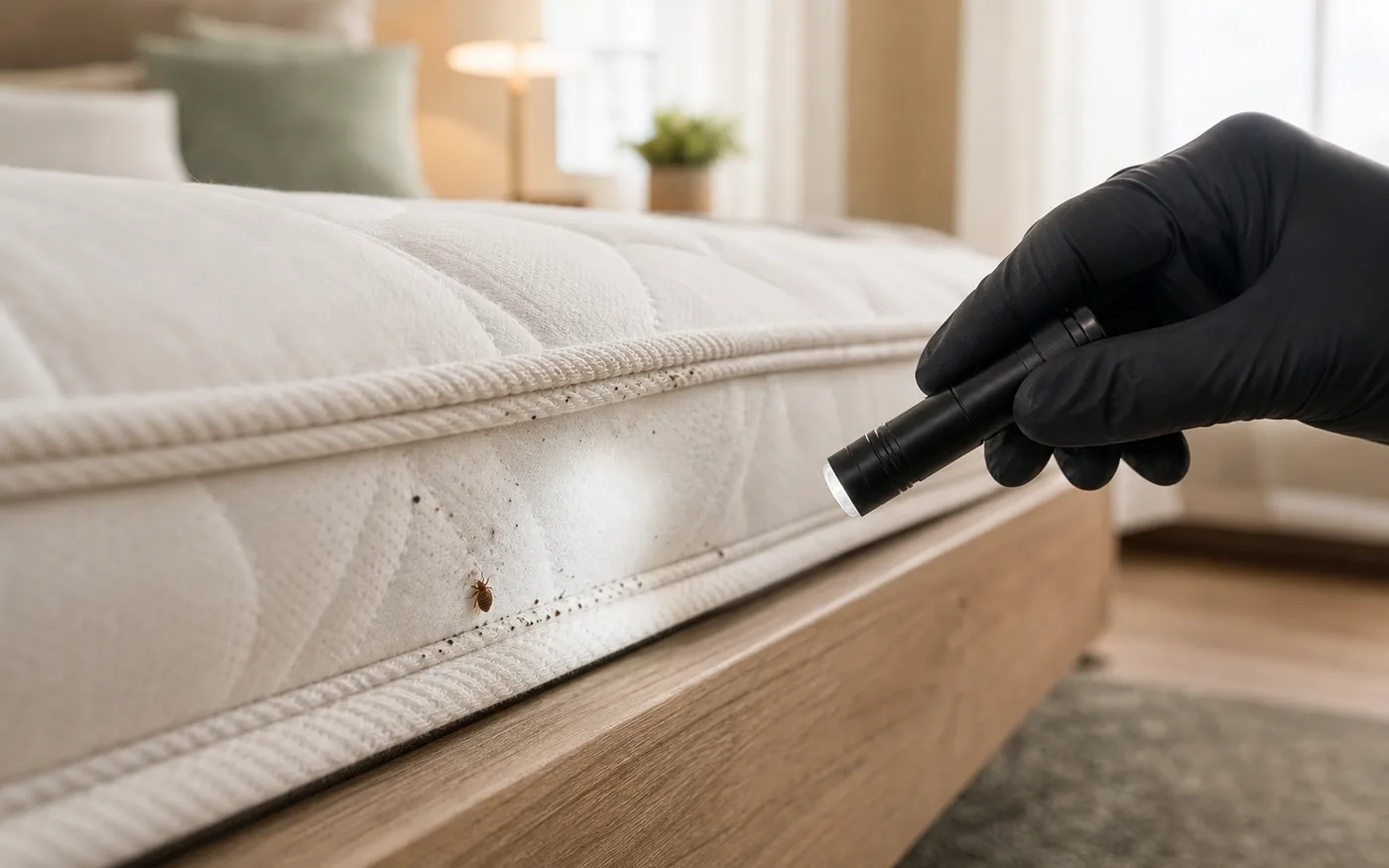
You wake up to find three bites in a straight line on your arm, red and itchy. You assume it’s mosquitoes, dab on some cream, and forget about it. Two days later, new bites show up. By the end of the week, it’s happening every single day. You pull back the sheet, not quite believing it, until you spot a tiny black dot along the mattress seam, and another one right next to it. That’s when it clicks: this isn’t mosquitoes. It’s a different insect called the bed bug, and it has made a nest in the very bed you sleep in, without you ever noticing.
We wrote this guide from real homes we’ve treated across Cairo and Giza. This isn’t secondhand information; it’s what we see with our own eyes every week. We’ll walk you through it step by step: what the insect actually looks like, its bite and how it differs from a mosquito’s, where it comes from, how it multiplies, and most importantly, how to get rid of it at the source, not just on the surface.
What Are Bed Bugs, and Why Are They Called That?
A bed bug is a small insect that feeds on human blood at night while you sleep, and hides during the day in the cracks of your bed, mattress, and nearby furniture. It’s roughly the size of an apple seed, has no wings, can’t fly, and can survive for months without a meal. It gets its name simply from sticking close to the bed, since that’s where its prey is.
Its scientific name is Cimex lectularius, and people know it by several names: bed bug, mattress bug, or just “the bug.” It has nothing to do with cleanliness or poverty, no matter what many people assume. Tidy, upscale homes get infested just as easily as any other, because bed bugs travel in on bags and secondhand furniture, not because a place is dirty. That’s the first misconception we need to clear up.
What makes bed bugs such a tough problem is that they exploit one single weakness: you’re asleep while they’re active. They don’t wander around in plain sight during the day. They sense the warmth of your body and the carbon dioxide in your breath, which tells them you’re there, and they move in close. Once they’ve fed, they retreat quickly to their hiding spot. That’s why so many people spend months getting bitten without knowing the cause, blaming mosquitoes or a skin allergy instead.
There’s another factor that makes things harder: bed bugs reproduce at an alarming rate. A single female lays large numbers of eggs over her lifetime, and she lays them in narrow cracks that are nearly impossible to reach with the naked eye or a surface-level spray. That’s why someone who sprays their own bed only kills the insects they can see, while the eggs survive, and within a week or two the infestation comes back even stronger than before.
What Exactly Do Bed Bugs Look Like?
An adult bed bug looks like an apple seed: oval, flattened, 4 to 5 millimeters long, and reddish-brown in color. It has no wings, six legs, and two short antennae. After feeding on blood, its body swells, elongates, and darkens to a deeper red, which makes it much easier to spot. Eggs and young bed bugs are paler and considerably smaller.
To identify a bed bug correctly, you need to be able to tell its life stages apart, since they differ quite a bit in size and color:
- Egg: Extremely small, about a millimeter or less, pearly white, similar to a tiny grain of rice. Eggs stick together in clusters inside cracks and are hard to spot without a close look.
- Nymph (juvenile): Nearly translucent and pale when hungry, turning red or brown after a meal. It passes through five growth stages, getting slightly larger at each one.
- Adult: Reddish-brown, flat, about the size of an apple seed. This is the form most people recognize.
One of the clearest identifying features is how flat a hungry bed bug is from top to bottom, almost like a thin playing card, and that’s exactly what lets it squeeze into the narrowest crack behind a headboard or under wallpaper. But after it feeds, its shape changes completely: it swells, lengthens, turns somewhat cylindrical, and darkens to a deep red. That’s why two people describing “the same” insect might describe it very differently and both be right; they simply saw it hungry and full.
As for smell, a heavy infestation gives off a distinctive odor, a sweet, musty smell similar to spoiled almonds or damp rust. If you walk into a room and notice an unexplained odd smell along with other signs, take it seriously.
What’s the Difference Between Bed Bugs and Other Similar-Looking Insects?
A lot of people confuse bed bugs with other small insects. This table breaks down the quick differences:
| Insect | Size | Color | Does it fly? | Bites and feeds on blood? |
|---|---|---|---|---|
| Bed bug | 4-5 mm | Reddish-brown | No | Yes, at night |
| Small cockroach | Much larger | Dark brown | Some species | No |
| Tick | Variable | Grayish-brown | No | Yes, attaches for a long time |
| Weevil/mite | Much smaller | Pale | No | No |
| Ant | Variable | Black/brown | Only flying ants | No |
Bottom line: if the insect is about the size of an apple seed, flat, reddish-brown, unable to fly, and you’re finding bites at night, there’s a strong chance it’s a bed bug.
What Are the Signs of Bed Bugs in Your Home?
The main signs of a bed bug infestation are bites in a line or cluster on skin exposed while sleeping, tiny blood spots on the sheets, ink-like dark stains along the mattress seams and bed frame, pale skin casts shed by growing nymphs, and a heavy, sweet smell in severe infestations. Finding two or more of these signs is close to a confirmed case.
Let’s break these down so you know what to look for yourself:
- Bites: The clearest and earliest sign to appear. You’ll find them in the morning on your arm, neck, shoulder, or leg, basically any part of your body left exposed while you slept. They usually show up in a line or a tight cluster.
- Blood spots: When you roll over onto a bed bug that has just fed, it leaves a tiny blood spot on the sheet or pillowcase. Small, unexplained brown spots on your bedding are a strong indicator.
- Dark stains: This is bed bug droppings. It looks like small clusters of dried ink, showing up along the mattress seams, in the cracks of a wooden bed frame, behind the nightstand, and sometimes along the edge of wallpaper near the bed.
- Skin casts: As nymphs grow, they shed their outer skin, leaving behind pale, empty casts shaped exactly like the insect.
- Eggs: Tiny white eggs clustered inside cracks. You’ll usually need to look closely, sometimes with a flashlight, to spot them.
The areas you should check first: all four sides of the mattress seam, underneath the mattress, inside the wooden bed frame, the nightstand, and the drawer nearest the bed. Bed bugs are reluctant to travel far, so they tend to nest within about half a meter of where you sleep. The farther you get from the bed, the less likely you are to find them, except in old, large infestations that have spread to the living room and sofas.
What Does a Bed Bug Bite Look Like, and How Long Does It Last?
A bed bug bite appears as a small, raised red bump, sometimes with a darker center, and it itches intensely. Bites tend to appear in a straight line or a cluster of 3 to 5, on the parts of the body exposed while sleeping. You might not feel anything at the moment of the bite; the itching often shows up hours later, or even a day or two afterward, and can last anywhere from a few days to a week.
What makes bed bug bites so distinctive is the pattern. The bug bites, feeds briefly, shifts slightly, bites again, and repeats. That’s why bites often appear in a line or a close zigzag, what people commonly call “breakfast, lunch, and dinner”: three bites in a row. This pattern alone sets bed bugs apart from most other insects.
Reactions vary widely from person to person:
- Some people get bitten and show no reaction at all, which lets an infestation go unnoticed for a long time.
- Some develop simple itchy red bumps that fade within a few days.
- Others are allergic and develop large blisters or noticeable swelling and intense itching that disrupts their sleep.
One important point: the location of a bite isn’t literal proof of exactly where the bug fed, but bed bugs generally target exposed skin since they typically can’t bite through clothing. So if you sleep in short sleeves, you’ll find bites on your forearm below the elbow; if your legs are bare, you’ll find them there. This also sets bed bug bites apart from other causes, which tend to appear more randomly scattered.
What’s the Difference Between a Mosquito Bite and a Bed Bug Bite?
The difference between a mosquito bite and a bed bug bite comes down to pattern and timing. Mosquitoes bite singly and at random on any exposed area, and the itching starts right at the moment of the bite and fades quickly. Bed bugs bite in a line or a tight cluster on skin exposed while sleeping, the itching is delayed by hours to days and lingers longer, and it recurs night after night in the same sleeping spot.
Here’s a quick comparison table to make the difference clear:
| Factor | Mosquito bite | Bed bug bite |
|---|---|---|
| Pattern | Single, random | Line or cluster of 3-5 |
| Timing | Itches immediately | Itching delayed by hours to days |
| Location on the body | Any exposed area | Areas exposed while sleeping |
| Audible? | Yes, buzzing | No, completely silent |
| Where it recurs | Anywhere in or outside the house | Same bed, every night |
| Duration | Fades quickly | Lingers longer |
The simplest practical test: if the bites come in a line, keep recurring every night, only happen when you sleep in a particular bed, and you never hear buzzing or see a mosquito, bed bugs are far more likely than mosquitoes. Another strong clue is that if you change rooms and sleep somewhere else and the bites stop, that points squarely at the bed itself.
Some people also confuse bed bug bites with ant bites or an ordinary skin allergy. Ants bite during the day while you’re awake and aware of it, and an allergic reaction tends to be spread out rather than arranged in a neat line on the areas you sleep on. Bed bugs, on the other hand, always follow the same pattern: at night, on exposed skin, in rows, and recurring.
Where Do Bed Bugs Actually Come From?
Bed bugs always arrive by hitching a ride; they don’t spontaneously appear in a space. They come in with secondhand furniture, in bags and luggage after travel or a hotel stay, with used clothing, or from an infested neighboring apartment through cracks and air-conditioning pipes. Cleanliness doesn’t stop them from getting in, but it does make an early infestation easier to spot before it spreads.
Let’s break down the main ways bed bugs get into a home:
- Travel and hotels: By far the most common cause. You stay at a hotel or rented apartment that has bed bugs, and they climb into your luggage or clothing and travel home with you. That’s why we always recommend checking the bed in any place you spend the night away from home.
- Secondhand furniture: Any used mattress, sofa, or bed frame may have bed bugs or eggs hiding in the seams. This is a very common cause in homes that buy secondhand furniture.
- Neighbors: In apartment buildings, bed bugs travel from unit to unit through wall cracks, drain pipes, air-conditioning ducts, and even under doors. Your home can be spotless and the source can still be your neighbor’s apartment.
- Secondhand clothes and bags: Buying used clothing or borrowing a bag can bring bed bugs along with it.
- Visitors: Rarely, but it can happen if a guest carrying bed bugs in their bag stays overnight.
The key thing to understand is that bed bugs don’t breed out of dampness or dirt the way cockroaches or mosquitoes do. Something or someone has to carry them in. So if they suddenly show up in your home, think back: have you traveled recently? Brought in secondhand furniture? Does a neighbor have a problem? The answer helps prevent the infestation from coming back after treatment.
This also explains why surface-level treatment fails. If you only treat your own apartment while the source is your neighbor’s place or an infested piece of furniture, the bed bugs will come back. Proper treatment looks at the entry path, not just where the bites are happening.
How Does the Bed Bug Life Cycle Work?
The bed bug life cycle has three stages: egg, nymph (across five growth stages), then adult. Eggs hatch in 6 to 10 days, and each nymph stage needs a blood meal before it can move on to the next. Going from egg to adult takes about 5 to 7 weeks in warm conditions, and slows down in the cold. A female lays large numbers of eggs over her lifetime.
Let’s walk through the cycle in detail so you understand why bed bugs come back after the wrong kind of spraying:
The first stage, the egg: the female glues her eggs into narrow cracks; they’re white and about a millimeter in size. Eggs usually hatch within 6 to 10 days depending on room temperature, warmth speeds up hatching and cold slows it down. Here’s the crucial thing to know: the eggshell protects them from most surface-level insecticides, and that’s the real secret behind why infestations return.
The second stage, the nymph: a small version of the adult emerges from the egg, smaller and paler. It passes through five growth stages, and at each one it must feed on blood in order to grow, shed its skin, and move to the next stage. In warm conditions, each stage takes about a week, provided a blood meal is available.
The third stage, the adult: after the final growth stage, the bed bug becomes a fully mature adult capable of mating and reproducing. On average, the full cycle from egg to adult takes 5 to 7 weeks in warm conditions, and it can stretch to several months in cold weather.
Why Do Bed Bugs Come Back After You Think You’ve Gotten Rid of Them?
The main reason bed bugs return is the eggs. Any treatment that only kills the moving insects and leaves the eggs behind means that within a week to ten days, a new generation will hatch and start the whole cycle over again. That’s why proper treatment always needs a follow-up visit about two weeks later, timed precisely for when the remaining eggs have hatched, so the new generation is wiped out before it can lay eggs of its own.
The second reason bed bugs return is their ability to go without food for extended periods. An adult bed bug can survive for many months without feeding, staying completely still, hidden in a distant crack. So if a treatment doesn’t cover every hiding spot, a dormant bed bug can emerge later, right when you think you’re done. That’s what makes reaching every single crack and corner more important than the strength of the insecticide itself.
Do Bed Bugs Live in Clothes?
Bed bugs hide in stored clothing and in closets near the bed, but they don’t live on your body or on clothes you wear every day the way lice do. For a bed bug, clothing is more of a hiding and travel method than a place to settle permanently. That’s why hot-water washing and heat-drying are among the most important steps for treating clothes.
Let’s clear up a point that worries a lot of people: bed bugs don’t live in your hair or on your skin the way lice do. They approach you at night purely to feed, then retreat to their hiding spot. So don’t worry about them traveling around with you in your clothes all day. That said, you do need to take stored clothing and closets seriously, since bed bugs hide there during the day, especially if the closet is near the bed.
Here’s how to handle clothing and fabrics in detail:
- Hot-water washing: Wash anything that can handle high heat on the hottest setting. High heat kills both bed bugs and their eggs. This matters more than almost anything else.
- Heat-drying: If you have a clothes dryer, a heat cycle for a sufficient amount of time kills whatever survived the wash. Even clothes that don’t need washing can go through a hot drying cycle just to be sure.
- Sealing in bags: Once clean clothes have been treated, seal them in closed plastic bags so they don’t get reinfested before the rest of the home is fully treated.
- Emptying closets: Any closet near the bed needs to be emptied out and inspected, since it’s one of the most common hiding spots.
Shoes and bags also need attention, since bed bugs hide in their seams and folds and travel between rooms inside them. If you’re back from a trip, wash your clothes hot right away and don’t set your suitcase down on the bed.
Do Bed Bugs Fly or Jump?
No, bed bugs can’t fly or jump. This insect has no wings at all and moves purely by crawling along surfaces. So if you see a flying insect in the room, it’s definitely something else, not a bed bug. That said, keep in mind that bed bugs crawl fast enough to travel from a bed to a nearby sofa and move between adjacent pieces of furniture.
This question comes up often, and it’s worth clarifying because it sets bed bugs apart from other insects. Mosquitoes fly and buzz, flying ants take to the air during certain seasons, and some cockroaches can flutter short distances. But bed bugs are pure crawlers. If someone tells you they “saw a flying bed bug,” they most likely saw a different insect or simply misidentified it.
So if they can’t fly, how do they reach an apartment on the tenth floor? The answer is that they travel in one of two ways: either crawling through cracks, pipes, and air-conditioning ducts between units, or “hitchhiking” on bags, clothes, and furniture that move from place to place. They never need to fly to reach any floor; they simply wait for a ride.
The practical takeaway here is that since bed bugs only crawl, their paths can be blocked. Sealing cracks, keeping the bed away from the wall, and setting up barriers around the bed legs are all tactics that work against a crawling insect, and wouldn’t work at all against a flying one. That gives us a real advantage in treatment, if we use it correctly.
Can Bed Bug Bites Cause an Allergic Reaction, and How Do I Treat Them?
Bed bug bites cause itching and localized irritation, and some people with allergies develop larger swelling and blistering. Home care: wash the area with soap and water, apply a cold compress to calm the itching, and use an anti-itch cream. Avoid scratching, since it can lead to a bacterial infection. See a doctor if the allergic reaction is severe or general symptoms appear.
Let’s start by putting your mind at ease on one point: a bed bug bite, however irritating, does not transmit diseases to humans the way a mosquito bite can. There’s no evidence it spreads infection from person to person. The real problems with the bite come down to three things: the itching and discomfort, allergic reactions in some people, and the psychological toll of the insomnia and anxiety that comes with being bitten in your sleep.
Steps for treating a bite:
- Clean the area: Wash the bite with soap and water. This reduces the risk of infection and soothes the skin.
- Cold compress: Apply something cold to the bite to reduce swelling and itching.
- Anti-itch treatment: An anti-itch cream or soothing lotion brings a lot of relief. If the allergic reaction is noticeable, a pharmacist may recommend an antihistamine.
- Don’t scratch: The hardest piece of advice, and the most important one. Scratching breaks the skin and can cause a bacterial infection that needs stronger treatment.
When should you see a doctor? If large blisters appear, if swelling spreads widely, if you notice signs of infection like pus and fever, or if someone in the household has a known allergy and develops general symptoms. In these cases, medical treatment becomes necessary and shouldn’t be delayed.
Just keep in mind that treating the bite soothes the skin, but it doesn’t solve the underlying problem. As long as bed bugs are still in the bed, the bites will keep coming. The real cure for the bite is eliminating its source.
What Are the Best Ways to Treat and Get Rid of Bed Bugs?
Bed bug treatment combines several methods: heat (hot washing and steam) to kill both the insect and its eggs, mechanical vacuuming, sealing cracks, along with specialized insecticides that reach hiding spots. Home methods reduce the numbers, but getting rid of bed bugs for good requires treatment that reaches the eggs and the source, not just the surface.
Let’s start with the methods you can do yourself. These are useful as a first step that reduces the infestation before professional treatment.
Mechanical and heat-based methods (safe and effective as a starting point):
- Vacuuming: Inspect the bed and cracks, and vacuum up any bed bugs and eggs you can see. Afterward, empty the vacuum bag into a sealed bag and take it out of the house immediately.
- Steam: A hot steam device kills bed bugs and their eggs with heat, wherever it can reach. Excellent for mattress seams and upholstered furniture.
- Hot washing and drying: Wash all bedding and clothing on high heat.
- Sealing cracks: Seal up cracks in the wooden bed frame and edges of wallpaper to reduce hiding spots.
- Mattress encasement: A bed-bug-proof mattress cover traps anything already inside and blocks new bed bugs from getting in.
Insecticides: The right insecticide, at the right concentration, applied in the right place, makes a huge difference. But this is exactly where most people go wrong. Many of the insecticides sold on the open market are weak, counterfeit, or applied incorrectly, so they kill what’s visible and leave the eggs and hidden insects behind. Random spraying in a bedroom without proper knowledge also exposes children and pets to risk with no real benefit.
This table compares the methods by how effective they are against the insect and its eggs:
| Method | Kills the insect? | Kills the eggs? | Reaches cracks? | Notes |
|---|---|---|---|---|
| Vacuuming | Partially | Partially | Weak | Only reduces numbers |
| Hot steam | Yes | Yes | Moderate | Excellent for surfaces |
| Hot washing | Yes | Yes | Clothing only | Essential for laundry |
| Off-the-shelf spray | Partially | Rarely | Weak | Infestation comes back |
| Professional treatment | Yes | Yes (with follow-up) | Strong | Reaches the source |
Here’s the honest bottom line: home methods give you temporary control and reduce the numbers, and that’s genuinely useful and worth doing. But permanent, guaranteed elimination of bed bugs requires the experience to read the infestation correctly, reach every crack, choose a safe, approved insecticide and apply it properly, and follow up about two weeks later to catch the generation that hatches from any remaining eggs. That’s the difference between easing the problem for a week before it returns, and actually getting rid of it.
Practical Steps to Take Before Treatment
Before any treatment, there’s preparation that significantly raises your odds of success. Doing the steps below makes it easier for treatment to reach every hiding spot and stops bed bugs from escaping to new areas. These steps are simple but important, and we recommend them to every customer ahead of a visit.
- Wash all nearby bedding and clothing on hot and seal them in bags once dry.
- Empty the nightstand and the drawer near the bed so they can be inspected from the inside.
- Pull the bed away from the wall a little, if possible, to cut off a travel path.
- Don’t move furniture from an infested room into a clean one, so you don’t carry bed bugs along with it.
- Don’t start spraying on your own before an inspection, since the wrong spray drives bed bugs to scatter and flee to more distant spots, making treatment harder.
That last point matters a great deal. A lot of people spray a strong insecticide everywhere before ever calling us, and the bed bugs sense it and flee from the bed to the sofa and other rooms, so an infestation that was once confined to one spot spreads across the whole house. If you have an infestation, the best move is to isolate the room and call a specialist before taking any major action yourself.
Why Is Professional Treatment More Reliable Than Home Remedies?
Professional treatment is more reliable because it reads the infestation correctly and reaches the source and the eggs, not just the surface. A trained technician knows how to search out hidden hiding spots, chooses a safe, approved insecticide and applies it the right way, then returns for a follow-up visit to catch the generation that hatches from the eggs. That closes the cycle instead of letting the infestation return after two weeks.
Let’s be straightforward with you: home remedies aren’t bad, and we recommend them as a first step. But the specific trouble with bed bugs is that they exploit small details: an egg hidden in a crack, a bed bug lying dormant and fasting in a distant corner, a source coming in from the neighbor’s apartment. If even one of these details gets missed, the infestation comes back. Experience here isn’t a luxury; it’s the difference between a temporary fix and a permanent one.
At Zed Egypt, our work runs on one core principle: we treat the source, not the surface. We don’t just spray at random and call it done. We inspect the infestation first, pinpoint the hiding spots and egg clusters, and treat in a way that reaches every single point. And because a bedroom is a sensitive space that often has children and sometimes pets in it, we use certified German products that are safe for children and pets, and our company is licensed by the Ministry of Health, so you can rest assured that whatever goes into your home is safe and properly authorized.
Something else our customers appreciate: a written 3-year guarantee. That means if bed bugs come back within that period, we come back and treat them again for free. This isn’t a slogan; it’s a written commitment we stand behind, and one we can make only because we trust the way we work, which reaches the actual source. And because pests don’t wait for a convenient time, we’re open 24/7, and we start with a free inspection to see the infestation firsthand and tell you honestly exactly what you need, with no exaggeration and no empty talk.
If you’ve made it to the end of this article while feeling itchy, or you’ve spotted one or two of the signs we’ve described in your own home, don’t let it grow. Bed bugs start small and localized, and with every week that passes they multiply, spread further, and become harder to treat. Call us for an inspection; we’ll assess the situation and tell you exactly where things stand and what solution fits best. A good night’s sleep is worth taking the problem seriously.
Sources: Orkin — Bed Bug Life Cycle · Medical News Today — Bed bug bites vs mosquito bites · GoodRx — Mosquito vs Bedbug Bites
Need expert help with Bed Bugs?
The Zed Egypt team controls Bed Bugs at the source with safe German products and a 3-year guarantee.
See our Bed BugsFrequently asked questions
How do I know if I have bed bugs in my home?
The key signs are bites in a line or cluster on skin that was exposed while you slept, tiny blood spots on the sheets, ink-like dark stains in the seams of the mattress, and pale, translucent skin casts. If you notice two or more of these signs, you very likely have bed bugs.
Do bed bugs fly?
No. Bed bugs have no wings and cannot fly or jump. They only move by crawling, though they crawl quickly and can reach far corners of a room. If you see a flying insect, it is something else, such as a mosquito or a flying ant, not a bed bug.
Are bed bug bites dangerous?
Bed bug bites do not transmit diseases to humans the way mosquito bites can, but they cause itching, allergic reactions, and skin irritation, and excessive scratching can lead to a bacterial infection. The real toll is often psychological, with the anxiety and lost sleep an infestation brings.
Can I get rid of bed bugs myself?
You can reduce their numbers with vacuuming, steam, and hot-water washing, but eliminating them completely is very difficult to do at home, since the eggs hide in narrow cracks and the insects can survive for months without feeding. Professional treatment ensures the source itself is reached.
How long does bed bug treatment take?
Professional treatment usually requires an initial visit and a follow-up visit around two weeks later to catch the generation that hatches from any remaining eggs. Results are visible within the first week, and complete elimination is confirmed at the follow-up visit, depending on how severe the infestation is.
Do bed bugs live in clothes?
Bed bugs do not live on your body or in clothes you wear often, but they do hide in stored clothing and closets near the bed, and they travel from place to place inside bags and shoes. Clothing is more of a means of transport for them than a permanent habitat.
Want to solve the problem right now?
Free inspection · safe German products · 3-year guarantee · open 24/7.